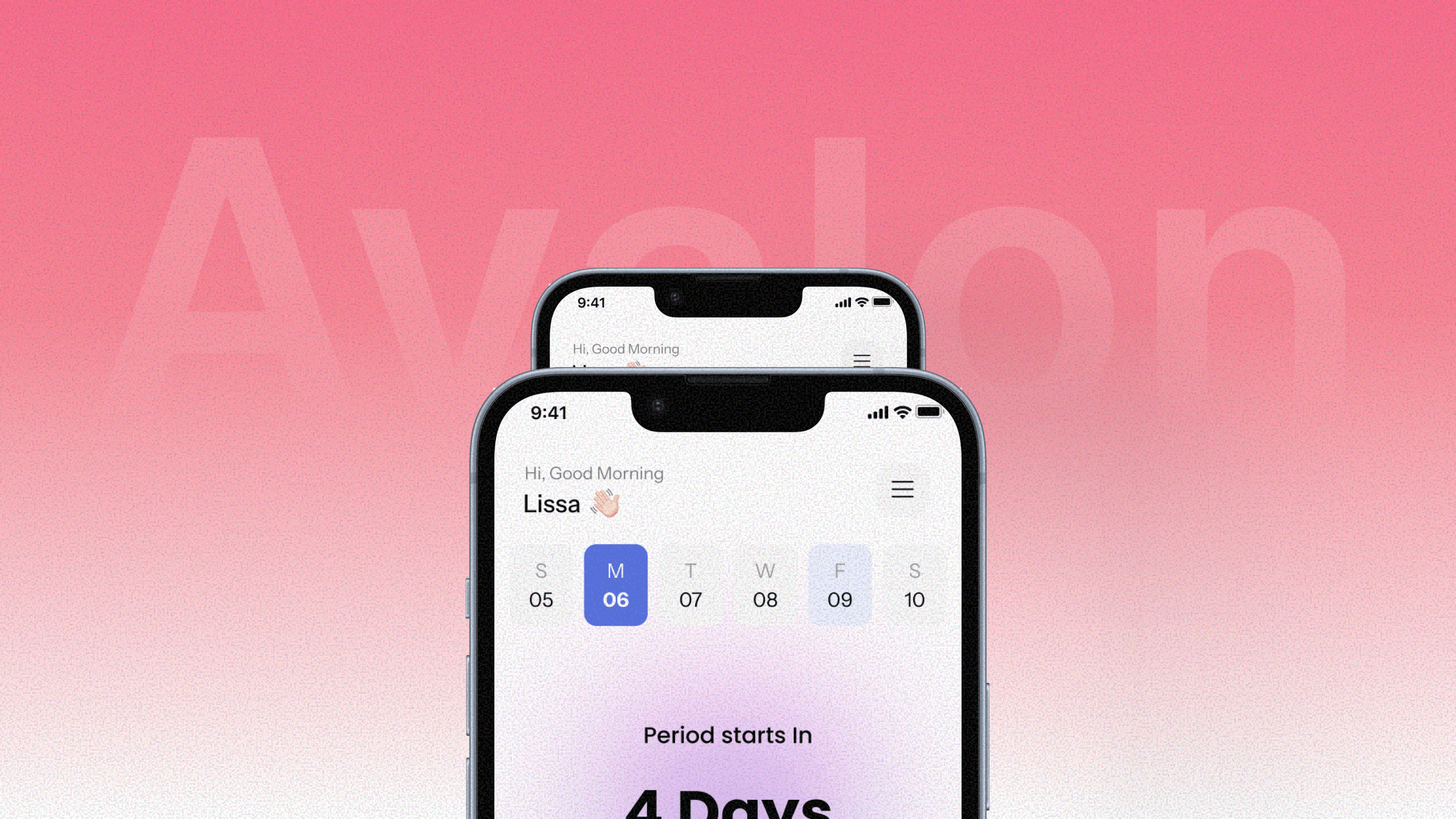
Avalon: Women's Health Guide
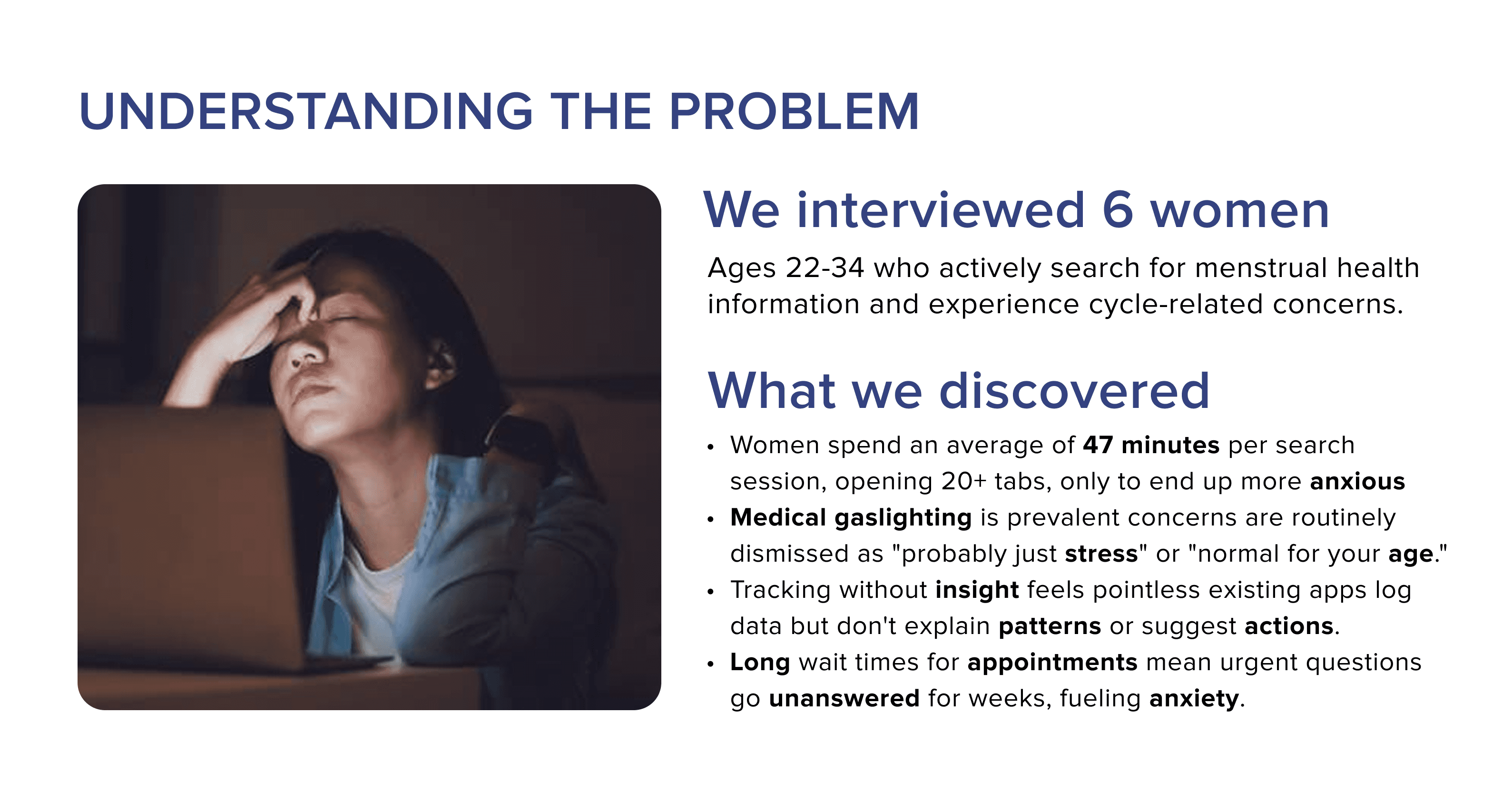
Avalon transforms how women get answers about menstrual health. Instead of drowning in 47 open browser tabs of conflicting medical advice, users have a judgment-free AI companion that provides evidence-based guidance bridging the anxiety gap between "something feels wrong" and "I need to see a doctor."
Health & Medical
The Challenge
The 2am Google Spiral
Picture this: It's 2am. You've been experiencing symptoms that feel off. You open Google. Within 15 minutes, you have 30+ tabs open. Half the sites say it's nothing. The other half suggest it could be serious. WebMD has convinced you of three different conditions. Reddit threads are terrifying. You close your laptop more anxious than when you started.
This is the reality for millions of women trying to understand their menstrual health.
The Real Problem:
Medical information online is either oversimplified or incomprehensible
Women's health concerns are routinely dismissed by providers ("it's probably just stress")
Period tracking apps collect data but don't provide insight or answers
Wait times for appointments mean questions go unanswered for weeks
Project Goal
Design a trustworthy, AI-powered platform that gives women immediate, evidence-based answers to menstrual health questions while acknowledging when professional medical care is needed.
Problem Statement
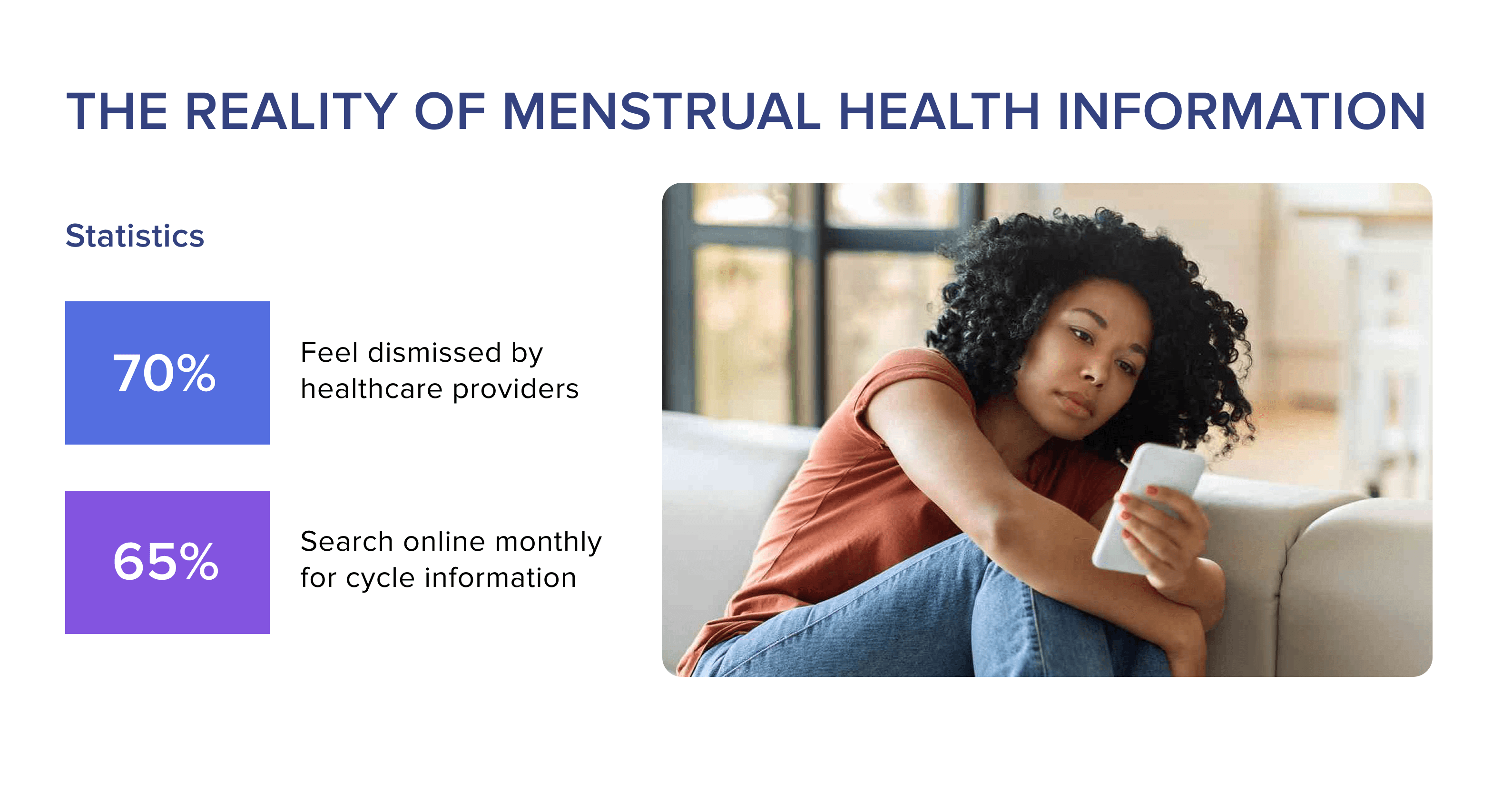
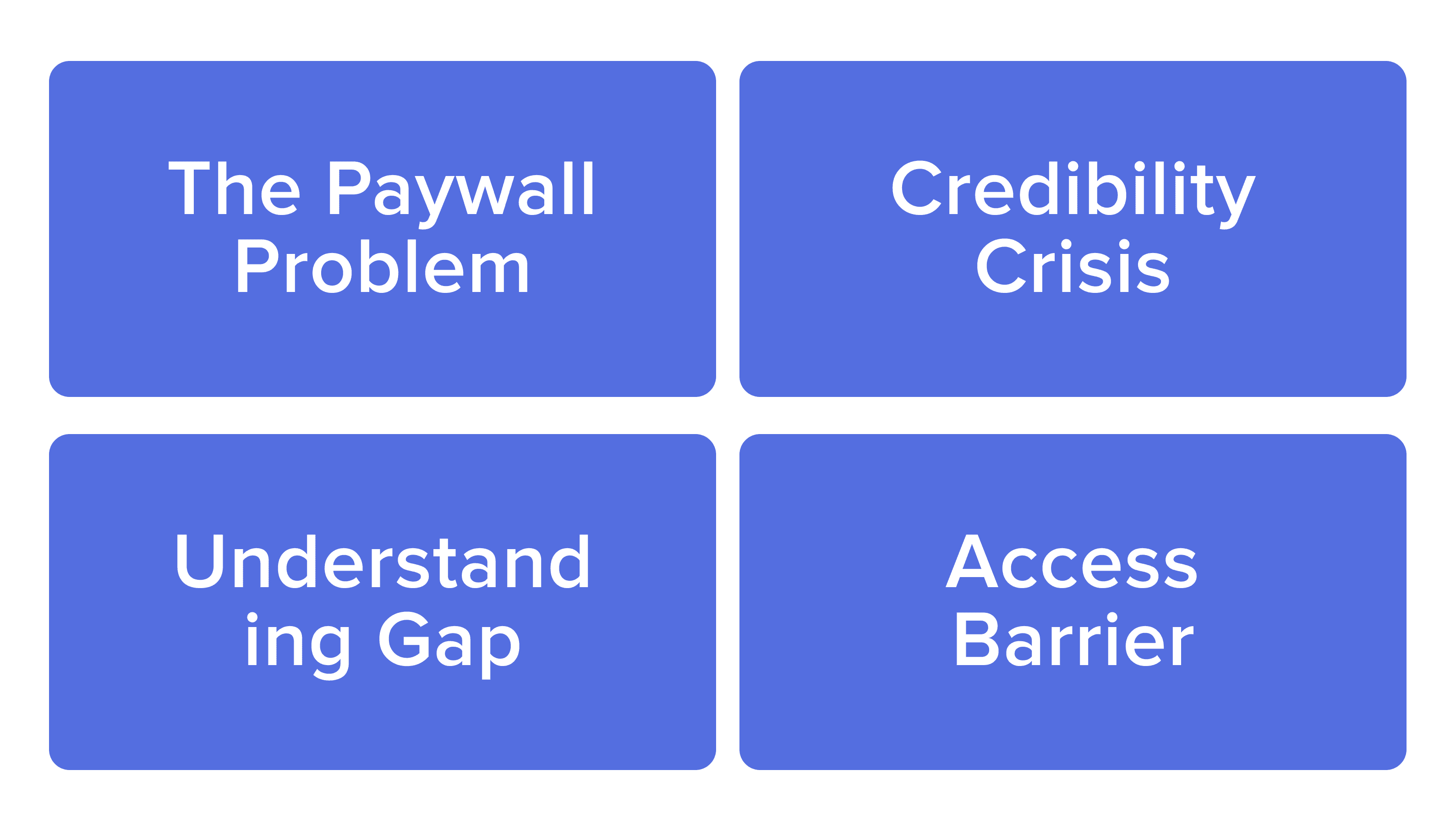
Getting answers about menstrual health has become an exercise in anxiety: online searches yield contradictory results, credible resources are hidden behind paywalls, healthcare providers dismiss legitimate concerns, tracking apps collect data without providing understanding, and weeks-long appointment waits leave critical questions unanswered.
Through conversations with 6 women navigating cycle health concerns and analysis of existing digital health tools, a pattern emerged: the path to understanding your own body shouldn't be this broken. This statement reflects the frustration every participant expressed in different ways.
From their lived experiences, four critical pain points emerged:
Ideation and Design Process
User Personas
Six conversations revealed two distinct patterns in how women navigate menstrual health uncertainty. Rather than creating demographic profiles, I mapped these patterns into behavioral personas that drove every design decision from feature prioritization to microcopy tone. These aren't fictional users; they're composites of actual pain points, behaviors, and goals expressed in research.
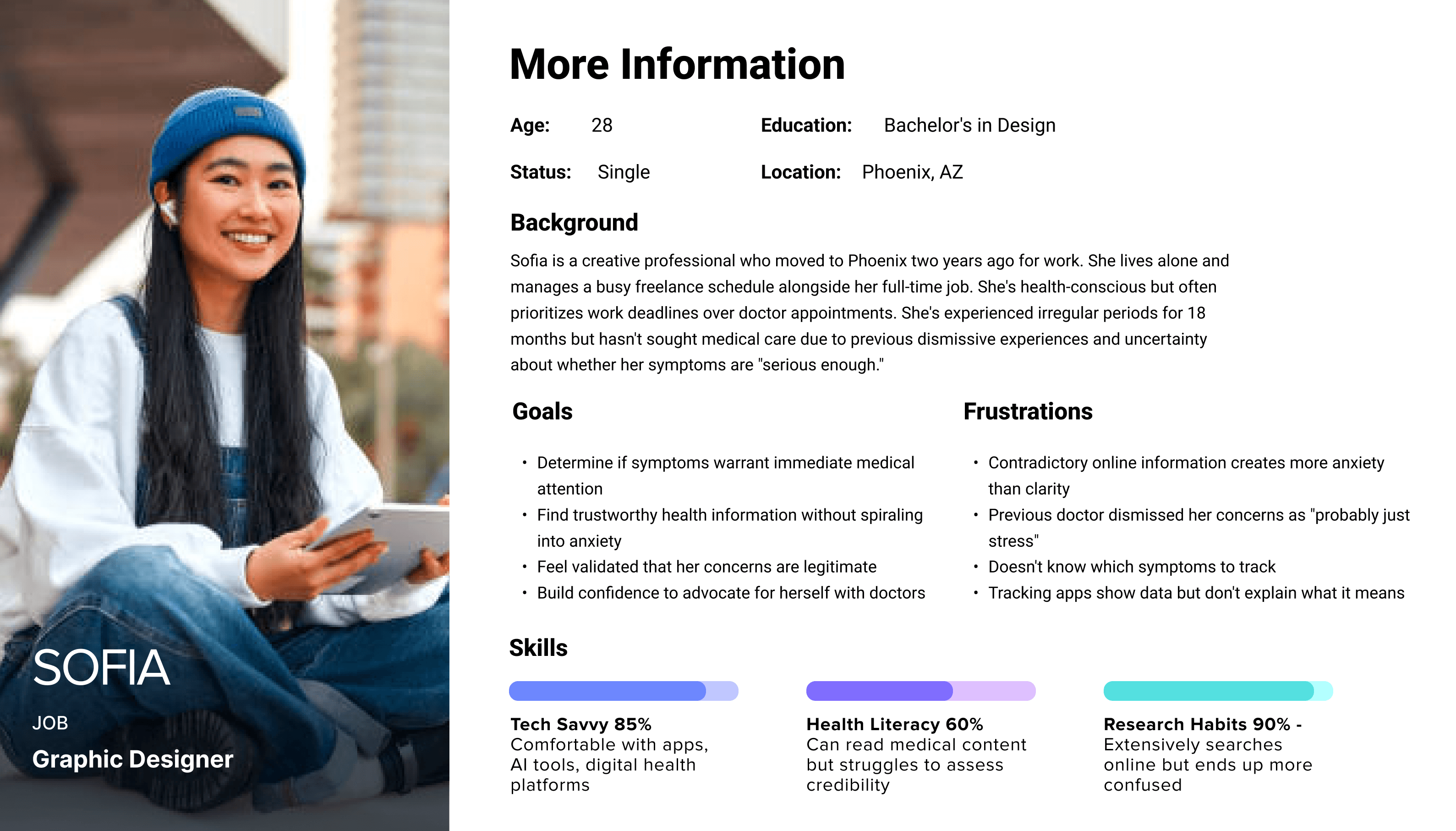
Sofia Peritti, a 28 year old Graphic Designer from Phoenix, AZ
Wednesday, 2:15 AM. Sofia can't sleep because of unusual cramping. She grabs her phone thinking "I'll just do a quick search." Flash forward 90 minutes: she has 34 tabs open across WebMD, Reddit, medical journals she can't access, and three different symptom checkers giving wildly different assessments. She's now convinced it could be anything from gas to ovarian torsion. She texts her friend "sorry for the 2am text but..." and deletes it before sending because she feels dramatic.
This cycle repeats 2-3 times weekly. Search. Spiral. Self-doubt. Silence.
Maya Chen, a 33 year old Software Engineer from Tucson, AZ
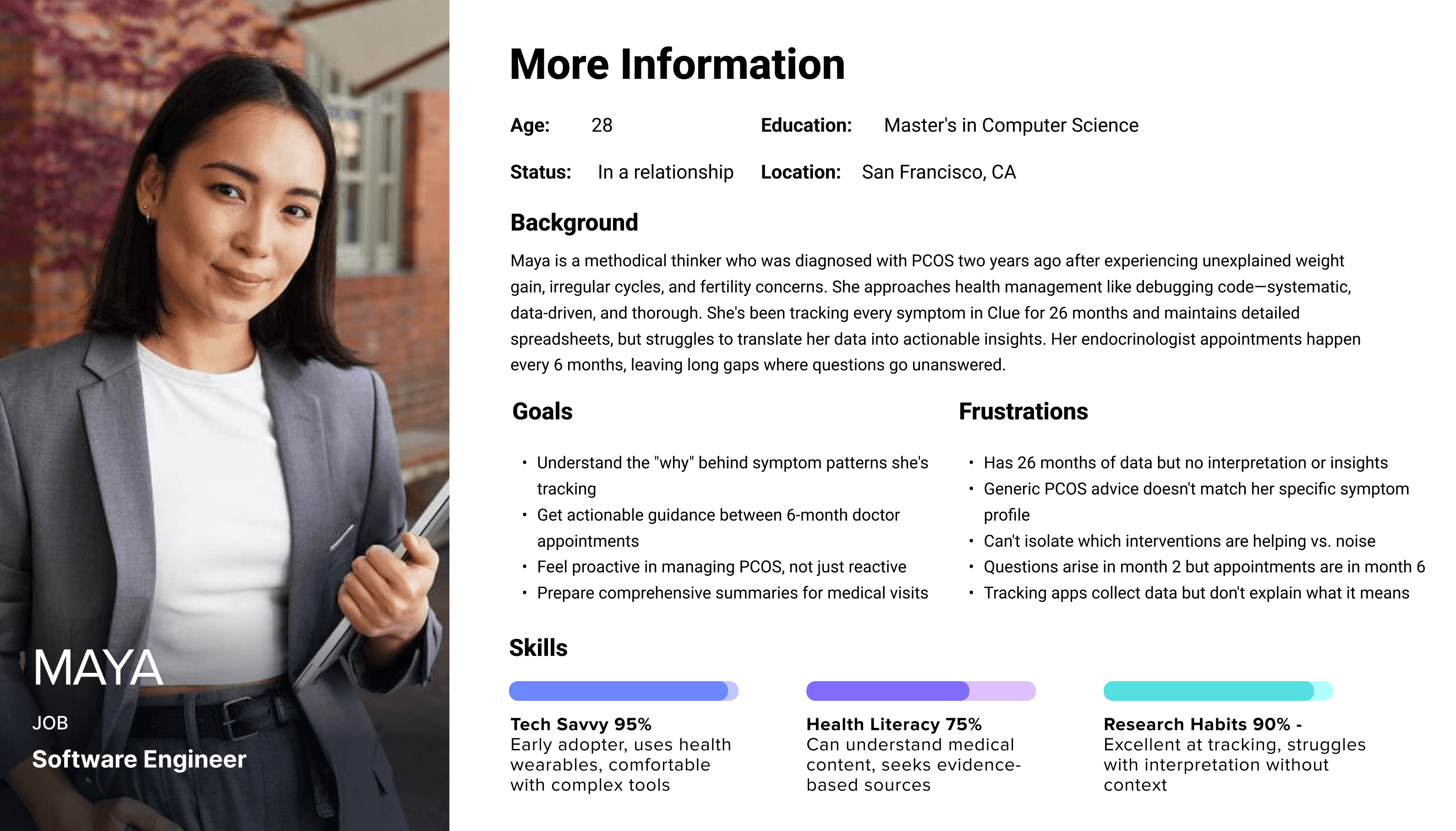
Sunday afternoon. Maya opens her laptop and pulls up her three spreadsheets: one from Clue exports, one tracking acne severity with timestamped photos, and one logging every supplement she's tried with notes on perceived effects. She's been doing this religiously for 26 months since her PCOS diagnosis. She can tell you her average luteal phase length (11.3 days), her cycle variability (±2.4 days), and exactly when her energy crashes each month (around day 21).
Her partner walks in and asks "Why have you been so tired this week?" Maya stares at her screen months of perfectly logged data and has no answer. She sees the patterns, she's documented the correlations, but she doesn't know what any of it means. Her next endocrinologist appointment is 3 months away. The questions she has today will be forgotten by then, buried under new data points and daily routines.
This is her reality: immaculate data hygiene, zero actionable insights. Track. Observe. Question. Wait.
CORE FEATURES
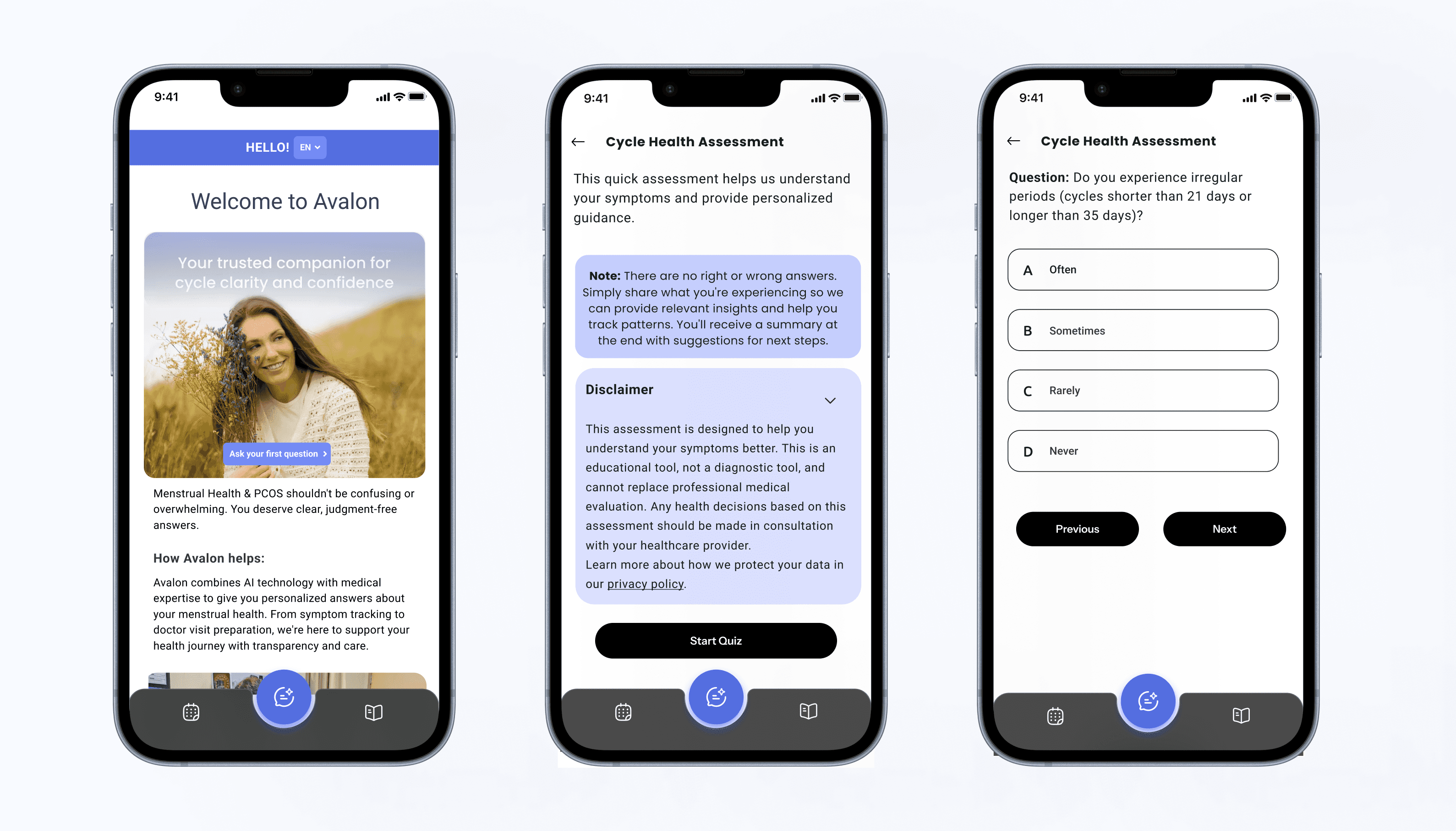
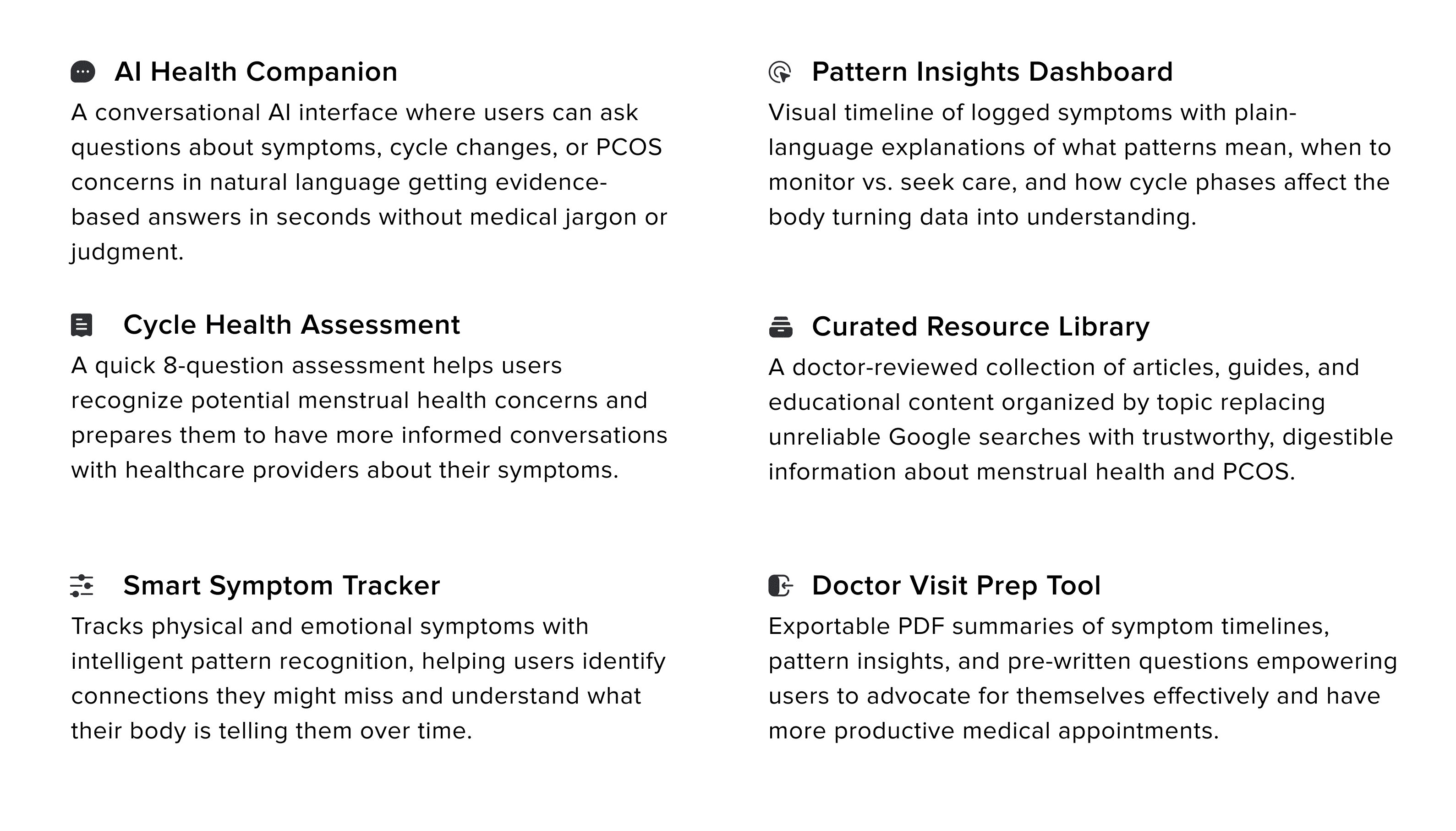
From the research and interviews I conducted, I identified key pain points and user needs, which guided the development of the following core features to create a seamless and empowering experience for women navigating menstrual health. Every feature in Avalon was designed with one goal: to make women feel heard, informed, and confident in their health decisions. Through conversations with 6 women, I heard stories of late-night Google spirals, dismissive doctor visits, and data without understanding. Avalon is my response a tool built with empathy and real-world needs in mind.
VISUAL DESIGN
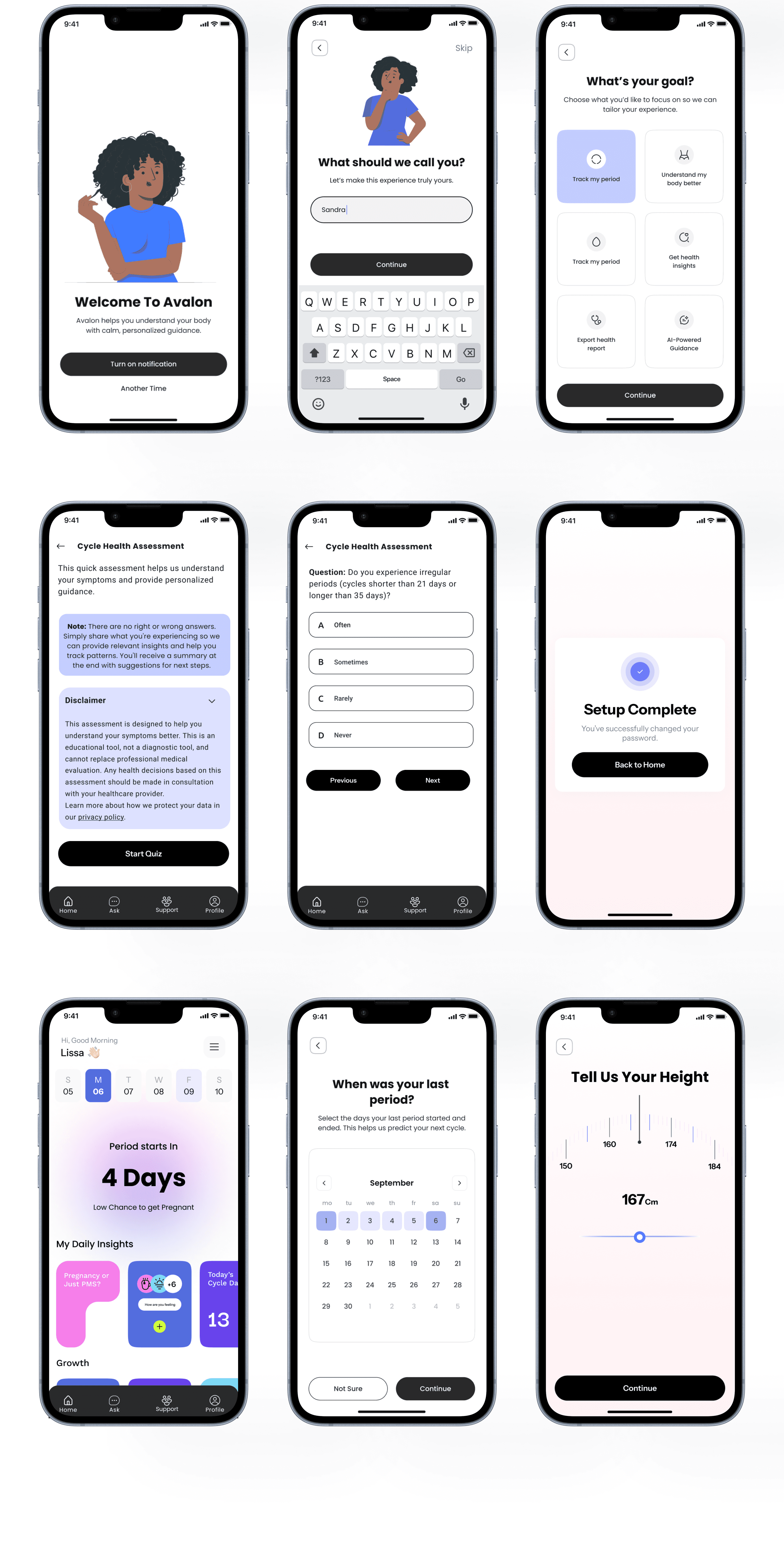
Most period tracking apps lean heavily on stereotypical pink aesthetics and flower illustrations design choices that many women find infantilizing. Avalon needed to signal both medical credibility and emotional safety, treating users as adults managing serious health concerns.
The challenge: look trustworthy enough to provide health guidance, but approachable enough that asking "embarrassing" questions feels safe.
USABILITY TESTING
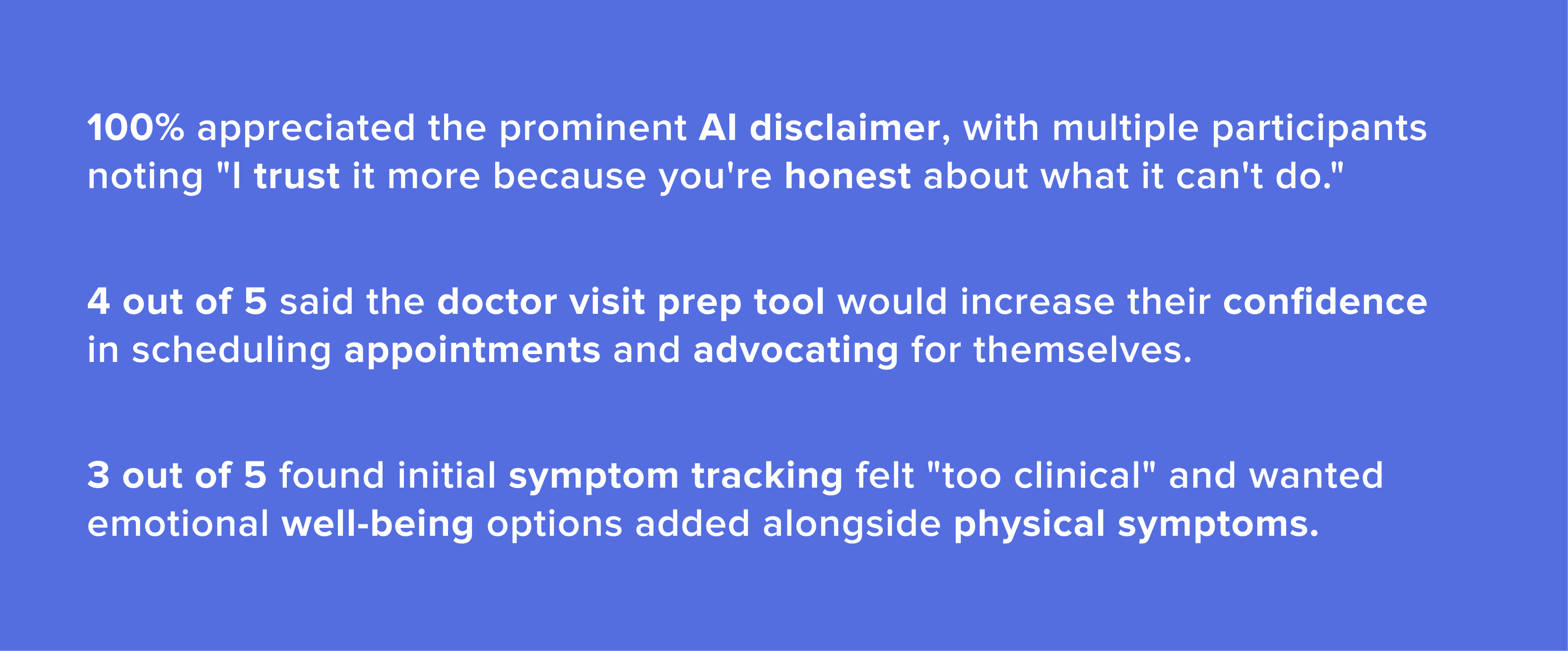
I conducted usability testing with 5 participants (ages 24-35) who actively search for menstrual health information online. Testing focused on evaluating the AI chat interface, symptom tracking flow, pattern insights comprehension, and overall trust in the platform. The feedback revealed both strengths and opportunities for refinement.